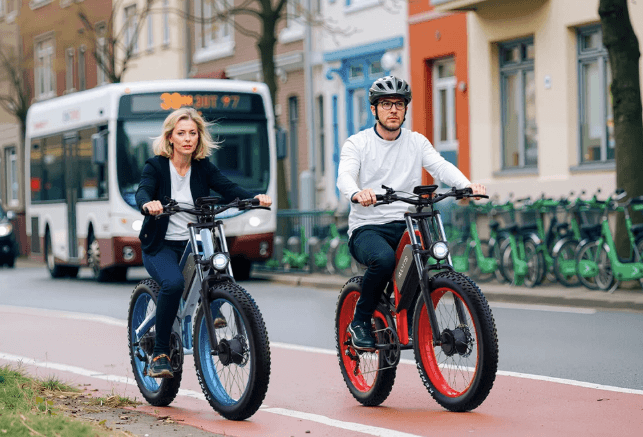
Nowadays, travel is more about flexibility than distance. People move through changing schedules, shifting routes, and unpredictable demands. In this environment, flexibility and efficiency are not optional—they are essential. E-bikes are becoming a preferred solution because they offer a unique balance of control, speed, and ease that fits modern travel habits.
Rather than forcing riders into a rigid system, e-bikes allow movement to adjust naturally to different situations. This ability to adapt is what makes them stand out in the evolving mobility landscape. Many communities adopting golf carts in Virginia are embracing more adaptable ways to handle short-distance mobility.
Adjustable Effort For Different Situations
One of the most valuable aspects of e-bikes is the ability to adjust effort based on need. Riders can increase or decrease assistance depending on distance, terrain, or personal energy levels.
This flexibility allows users to conserve energy during longer trips and apply more effort when desired. The result is a travel experience that can be customized in real time, supporting both efficiency and comfort without compromise.
Easy Transitions Between Routes
Modern travel often involves switching between different types of paths, such as streets, bike lanes, and shared spaces. E-bikes make these transitions seamless.
Their design allows riders to move fluidly across various environments without needing to change vehicles or adapt to entirely new systems. This continuity reduces interruptions and helps maintain a steady flow of movement.
Reliable Performance Across Conditions
Efficiency depends on consistency, and e-bikes are built to deliver reliable performance across different conditions. Whether dealing with slight inclines or longer stretches of road, they provide steady support that helps maintain momentum.
This reliability ensures that travel times remain predictable, which is important for managing daily schedules and commitments.
Reducing Dependency On Fixed Schedules
Traditional transportation options often require adherence to fixed schedules or routes. E-bikes remove this limitation by offering independent travel.
Riders can start and stop whenever they choose, creating a more flexible approach to movement. When timing is unpredictable or ever-changing, this independence is very helpful.
Supporting Multi-Purpose Travel
E-bikes are well-suited for combining different types of travel into a single journey. A rider can use them for commuting, running errands, or recreational activities without needing to switch modes.
This multi-purpose capability simplifies daily routines and reduces the need for multiple transportation solutions. It creates a more streamlined approach to managing various tasks.
Minimizing Delays In Busy Areas
Congestion can significantly impact travel efficiency. E-bikes offer a practical way to navigate through busy areas with fewer delays.
Their compact structure allows riders to avoid many of the obstacles that slow down larger vehicles. This ability to maintain movement in crowded environments enhances overall efficiency.
See also: How to Improve Business Productivity
Encouraging Spontaneous Travel Decisions
Flexibility is not only about planning but also about the ability to act spontaneously. E-bikes support this by making it easy to take unplanned trips or adjust routes on the go.
This spontaneity adds a layer of convenience that is often missing from more structured transportation systems. It allows users to respond quickly to changing needs.
Simplifying Daily Logistics
Managing daily travel often involves coordinating multiple factors, from timing to route selection. E-bikes simplify these logistics by providing a straightforward and dependable option.
With fewer variables to manage, riders can focus on reaching their destination efficiently. This simplicity contributes to a more relaxed and organized travel experience.
Enhancing Control Over Travel Pace
E-bikes give riders greater control over their pace, allowing them to adjust speed according to their preferences and surroundings.
This control improves both safety and efficiency, as riders can adapt their movement to match the conditions. It ensures that travel remains smooth and manageable in different situations.
Conclusion
E-bikes support flexible and efficient travel by offering a solution that adapts to the needs of modern life. Their adjustable assistance, reliable performance, and ability to navigate varied environments make them a practical choice for everyday mobility. By reducing dependence on rigid systems and simplifying daily logistics, e-bikes provide a more dynamic approach to travel. As mobility continues to evolve, they are helping shape a future where movement is not only efficient but also responsive to individual needs.